The Impact of AI on the Educational Transformation of Universities
UNIJES presents the results of a survey conducted among faculty members at its six universities regarding the use of generative artificial intelligence tools in teaching and research. The study, which involved 681 faculty members, provides a comprehensive overview of the integration of AI into higher education, analyzing both its main applications and potential, as well as the pedagogical, ethical, and academic challenges it currently poses in the university context.
Although the survey was conducted at the end of the 2024-2025 academic year, the results remain fully relevant and reflect some of the main debates that continue to shape the transformation of higher education: how to integrate AI in the classroom, how to adapt assessment systems, and how to preserve critical thinking and academic integrity.
The Integration and Use of AI in Jesuit Universities
The results show that generative AI is already part of the daily work of a large portion of the UNIJES faculty. More than 80% of participants report using AI tools at least once a week, primarily to prepare teaching materials, search for and synthesize information, generate ideas, or design learning activities.
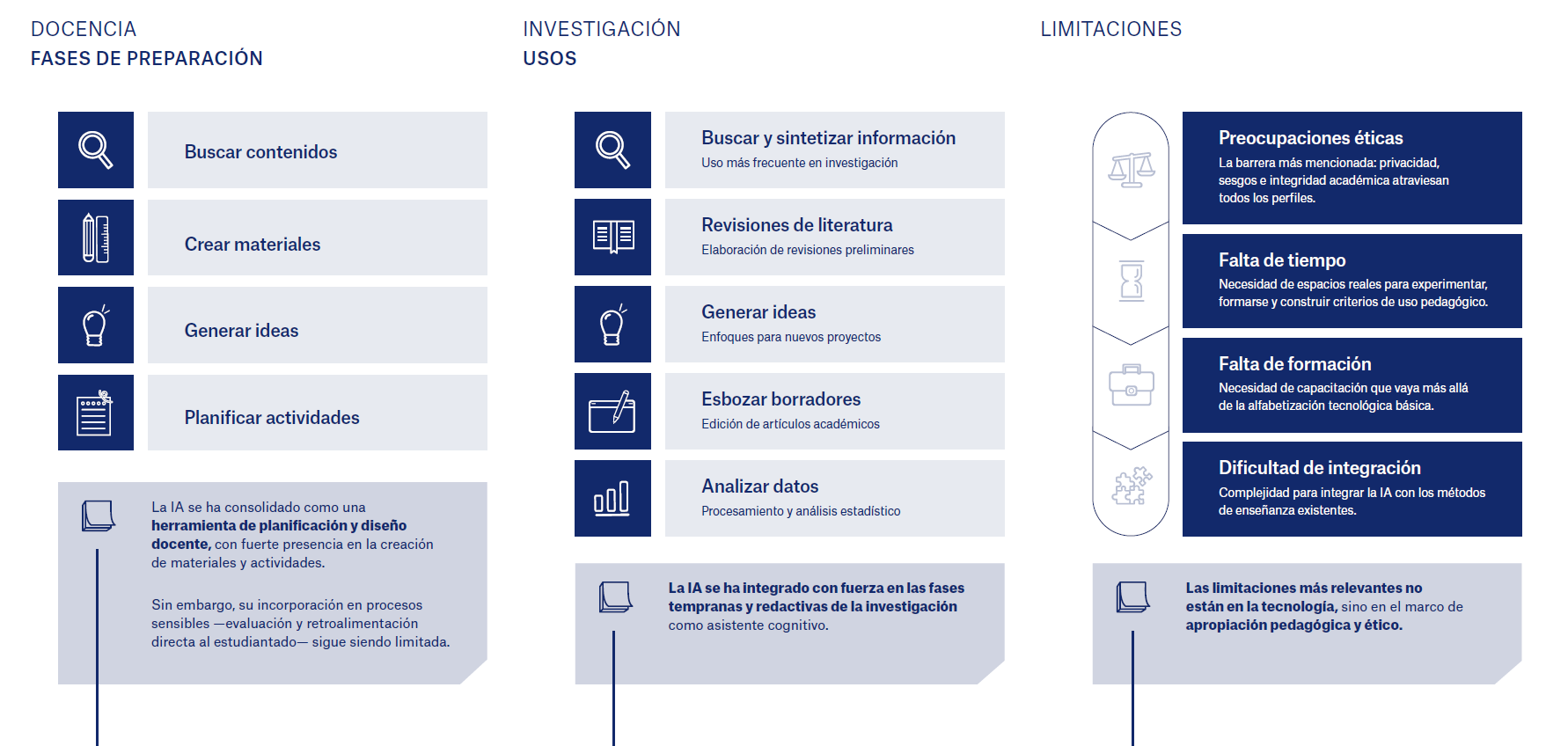
At the same time, the survey reflects a balanced and cautious stance regarding the impact of AI on learning. Faculty members acknowledge the potential of these tools to improve productivity, facilitate access to information, and support creative processes, but also express significant concerns related to the loss of critical thinking, academic integrity, authorship of work, and the need to redesign assessment methodologies and systems.
Main Findings of the Study
The report highlights the need to move towards a shared institutional framework that combines specific training, clear criteria for responsible use, and access to safe and appropriate tools for academic activity. It also underscores that the debate within the university community remains very active and that the integration of AI must be approached from a pedagogical, ethical, and humanistic perspective, aligned with UNIJES' educational mission.
The survey and report are part of the work promoted by the UNIJES Artificial Intelligence Working Group, created to share best practices, reflect together on the challenges of generative AI and promote a critical and pedagogically sound integration of these technologies in Jesuit universities.
Related Posts:
Scholars, researchers, and academic leaders from Jesuit universities around the world gathered from 9 to 12 March 2026 at the Ateneo de Manila University for the Inaugural Symposium of the Global Research Alliance of Jesuit Universities (GRAJU), marking a major milestone in global collaboration among Jesuit institutions of higher education.

The UNIJES VUELA Program facilitates meaningful community service through projects across Europe, Africa, and Latin America, emphasizing social action and development cooperation. With over 160 participants involved in 2023 and 2024, VUELA strengthens international collaboration and addresses global social challenges through hands-on service and engagement.
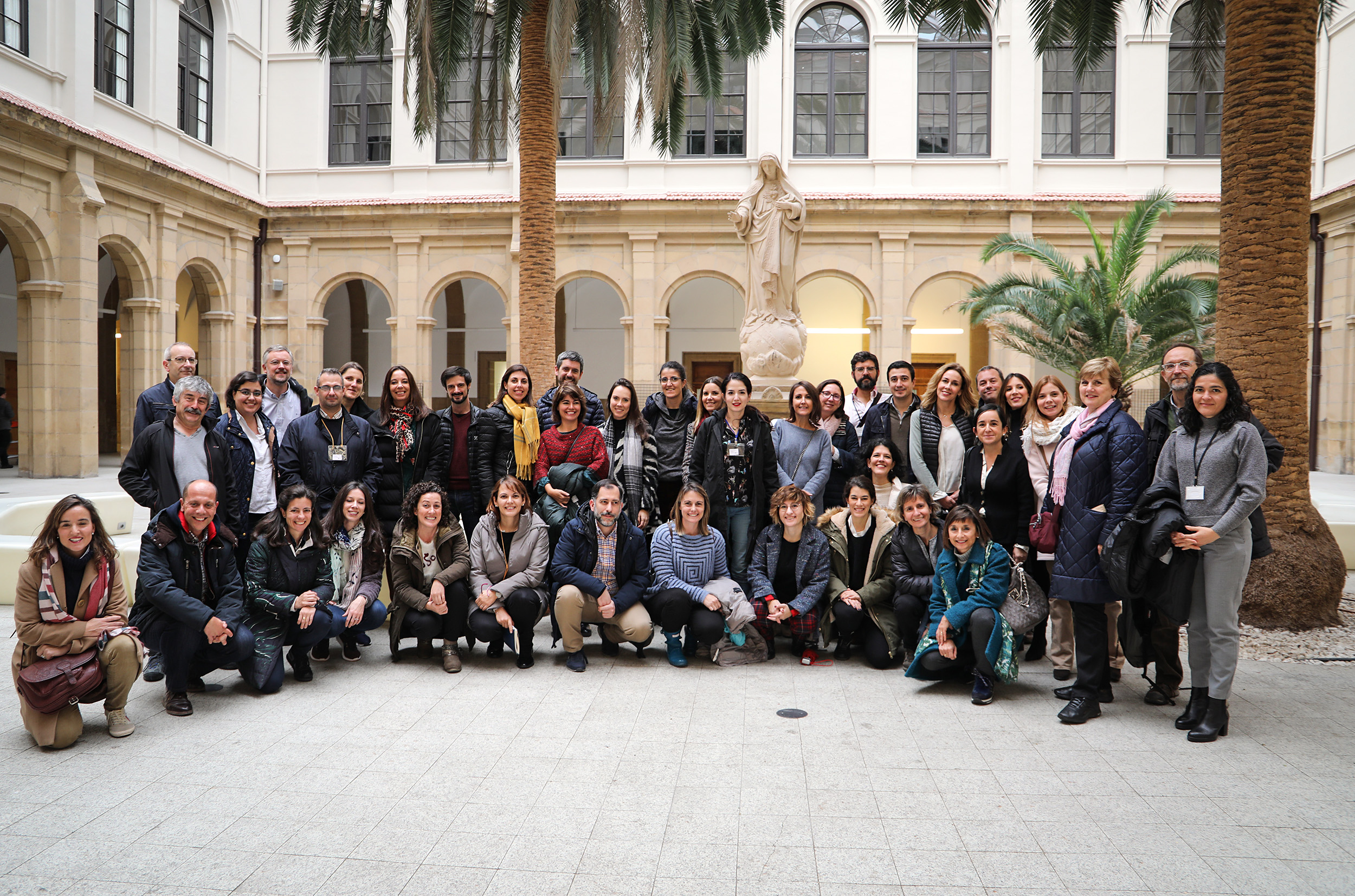
UNIJES, formed in 2012, coordinates Jesuit higher education in Spain. It promotes collaboration in identity and mission, inspired by the Ledesma-Kolvenbach Paradigm. Over 25 years, it has strengthened leadership and integration within Jesuit institutions.