The IPP: A Vision that Orders Everything
In an effort to promote formative experiences that translate the Ignatian Pedagogical Paradigm (IPP) into concrete practices of learning, service, and discernment, the Universidad Iberoamericana Torréon, through its Ignition Pedagogical Clinic, developed the Formation Plan for Catechists of the Parish of Santa María de las Parras.
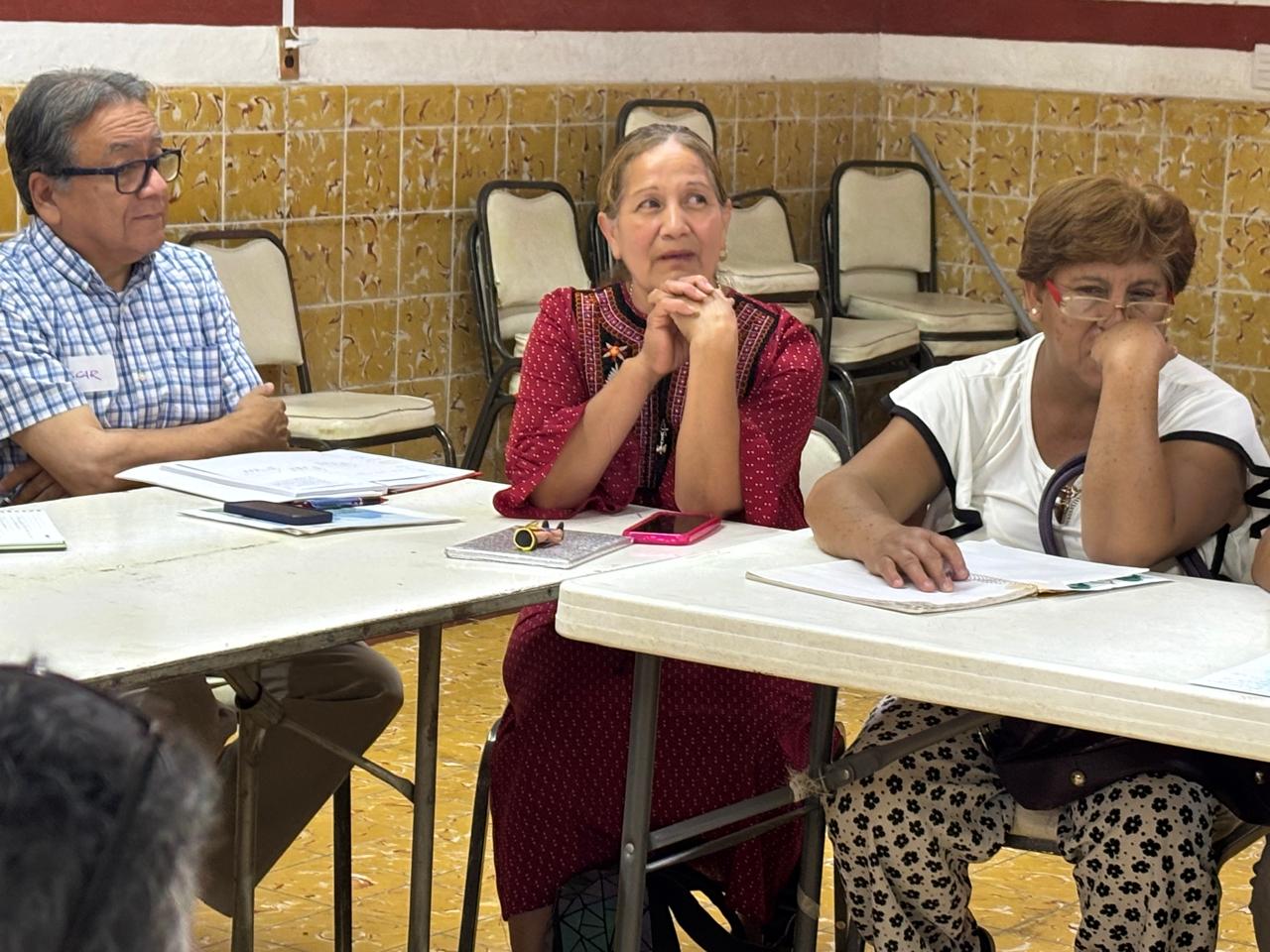
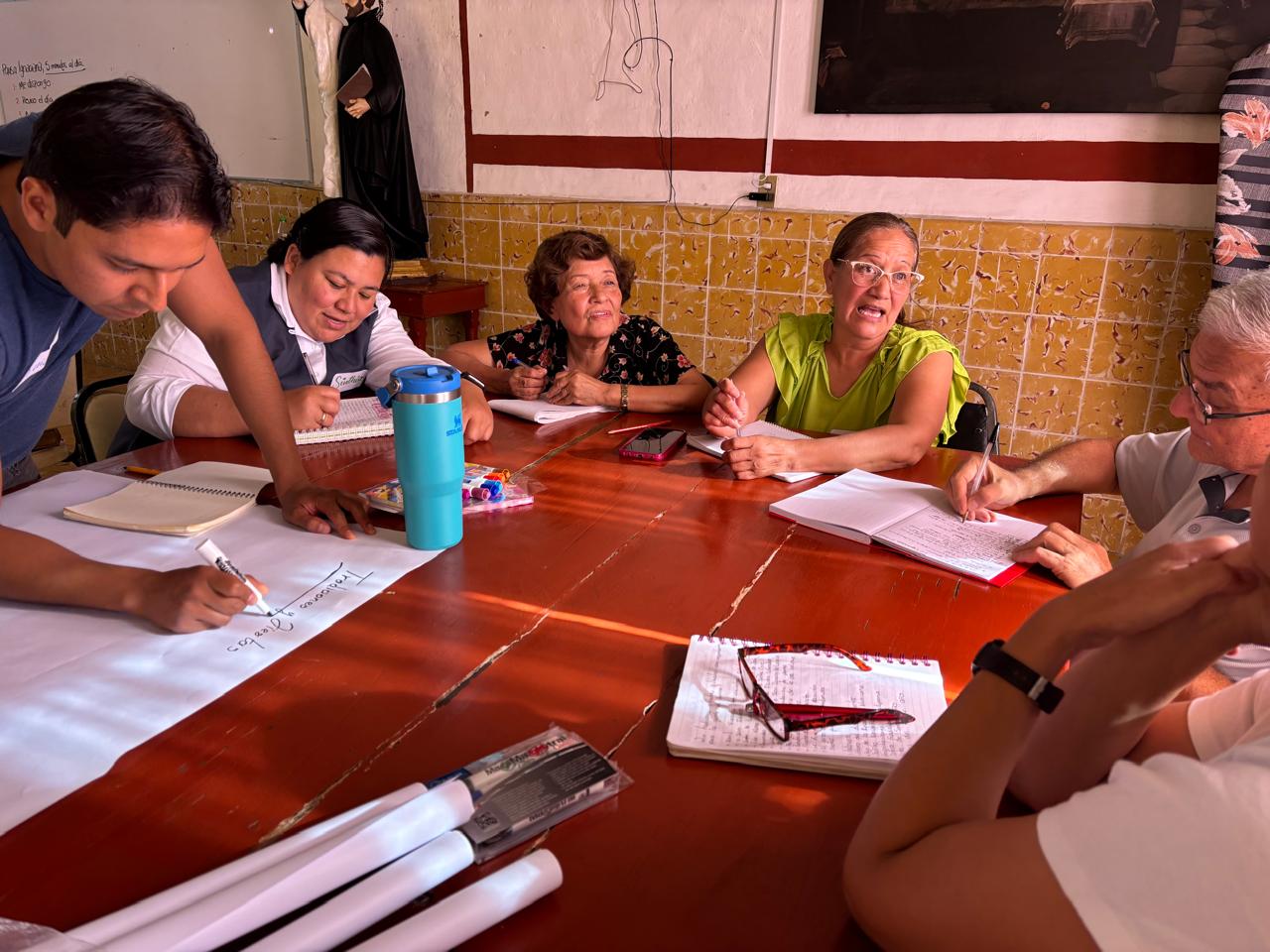
This process, carried out over five consecutive Fridays at the parish house, brought together more than twenty participants, including catechists—religious educators—and members of the Jesuit community. These participants followed an itinerary of reflection and practice inspired by the five moments of the IPP: context, experience, reflection, action and evaluation.
More than a theoretical course, this experience became a living space of faith, learning, and encounter in which Ignatian pedagogy became a way of seeing, understanding, and transforming local reality, thus strengthening the university’s educational mission in its bond with the community.
The word paradigm was popularized by sociologist Thomas Kuhn when speaking of a set of beliefs, values, techniques, and examples shared by a scientific community—that is, a vision that orders everything. A paradigm, at the epistemological level, implies a way of seeing the world and organizing experience; it is the lens through which ideas, perceptions, and what counts as valid knowledge at a given moment in science emerge. When used in the context of the Ignatian educational model, the word paradigm refers to that way of seeing, understanding, and generating the educational process (learning), eventually becoming a mode of seeing and being in the world.
Although educational institutions were not part of the original purpose of the Society of Jesus—founded in 1540—the first Jesuit college open to secular students was the College of Messina, established in 1548. Before his death in 1556, Ignatius of Loyola had approved the founding of numerous colleges, and by that year the Society already had an expanding educational network that would rapidly consolidate across Europe.
There are four key documents to refer to when discussing education in the Ignatian context: Part IV of the Constitutions of the Society of Jesus (1554), the Ratio Studiorum (1599), The Characteristics of Jesuit Education (1986), and the document Ignatian Pedagogy: A Practical Approach (1993). Although the word paradigm does not appear until the last document, the ideas related to paradigms, although not explicitly stated, are seen throughout all the sources, with the final document being a culmination of the earlier three. Why is the notion of paradigm relevant within the IPP? Because it is what orders everything.
This article arises from a desire to share the experience of a theoretical-practical workshop on the IPP delivered to catechists of the parish of Parras de la Fuente (Coahuila), whose primary objective was to live the elements of the paradigm in an intentional and conscious way. As one of the first activities, a “IPP cover page” was created as an attempt to explain the IPP using the IPP itself.
Creating a Paradigm Experience
The paradigm is often explained as if “we put on a pair of glasses” through which we see, organize, and act in the world; hence why the idea of the “IPPLenses” takes on particular relevance.
What follows is a recapitulation of the key concepts of pedagogy and others that form part of the IPP. Subsequently, a brief commentary is offered on how these concepts were applied in the catechists’ workshop, the results of that experience, and conclusions or projections of the IPP within the university, contributing to the idea of why it remains relevant: the IPP is not merely theory; it is a living way of seeing, thinking, and acting.
Theoretical Framework
Since the founding of the Society of Jesus in 1540, Ignatian pedagogy constitutes an educational tradition with more than four centuries of continuous development. It is not a didactic technique nor a closed model, but a formative proposal that articulates the intellectual, ethical, and spiritual dimensions within the educational process. This tradition is rooted in the Christian humanism of the sixteenth century and was progressively systematized in Jesuit colleges, particularly through the Ratio Studiorum (1599), which organized the educational practice of the order.
In the contemporary pedagogical field, the Ignatian tradition shares affinities with approaches that view education as a critical reflection on its purpose and values. From this perspective, pedagogy is not reduced to technical procedures. Instead, it interrogates the meaning of the educational act and its ethical and social implications.
Paulo Freire (1970-2021) defined education as praxis: the articulation between reflection and action oriented toward the transformation of reality. Although Ignatian pedagogy and critical pedagogy emerge from distinct historical contexts, both recognize the transformative dimension of learning and the centrality of critical consciousness.
Edgar Morin (1999) argues that contemporary education must integrate knowledge, ethics, and human responsibility in the face of the complexity of today’s world. This concern resonates with the Ignatian insistence on the integral formation of the person, understood as a unity of intellect, affect, and will.
Various contemporary authors have pointed to the ongoing relevance of Ignatian pedagogy for its capacity to articulate faith, justice, and social commitment in current educational contexts. In this sense, the IPP can be said to share structural features with subsequent humanist and critical currents, particularly in the articulation between experience, reflection, and transformative action, as well as in its emphasis on integral formation and social commitment. This assertion does not imply a direct historical causal relationship, but rather a conceptual convergence around an integral understanding of learning.
The Ignatian Pedagogical Paradigm is not reducible to theoretical exposition; its understanding deepens in practice and in the lived experience of its structural elements. It is a pedagogy that integrates discernment and commitment within the formative process.
This notion acquires operative formulation in the document Ignatian Pedagogy: A Practical Approach (Society of Jesus, 1993), which emerged as an attempt to formally integrate the principles previously expressed in the document The Characteristics of Jesuit Education (1986) into Jesuit educational practice. The paradigm seeks to articulate values within existing curricula, offer a framework applicable to diverse educational contexts, and systematize a formative tradition already present in the historical experience of the order. The document underscores the educational relationship as a privileged space of formation, in continuity with the importance that the Ignatian tradition places on the personal example of the educator.
In practical terms, the IPP proposes five interrelated elements within the dynamics of learning: context, experience, reflection, action, and evaluation.
Context involves recognizing the social, cultural, and personal conditions that influence the perception and understanding of reality. Learning always develops within a concrete situation that must be understood.
- Experience mobilizes the whole person—understanding, affect, and will—and can be direct or indirect. Meaningful experience integrates cognitive and affective dimensions, avoiding the reduction of learning to mere information.
- Reflection, in the context of discernment, allows for the interpretation of experience, the clarification of motivations, and the understanding of personal and social implications.
- Action constitutes the concrete expression of decisions reached through reflection, oriented toward personal and social transformation.
- Finally, evaluation transcends academic measurement and includes a review of personal growth and the coherence between learning and life.
In summary, the Ignatian Pedagogical Paradigm is fully understood when its elements are articulated in practice. Its core does not reside in an isolated technique, but in a way of integrating experience, discernment, and commitment within the educational process.
Methodology
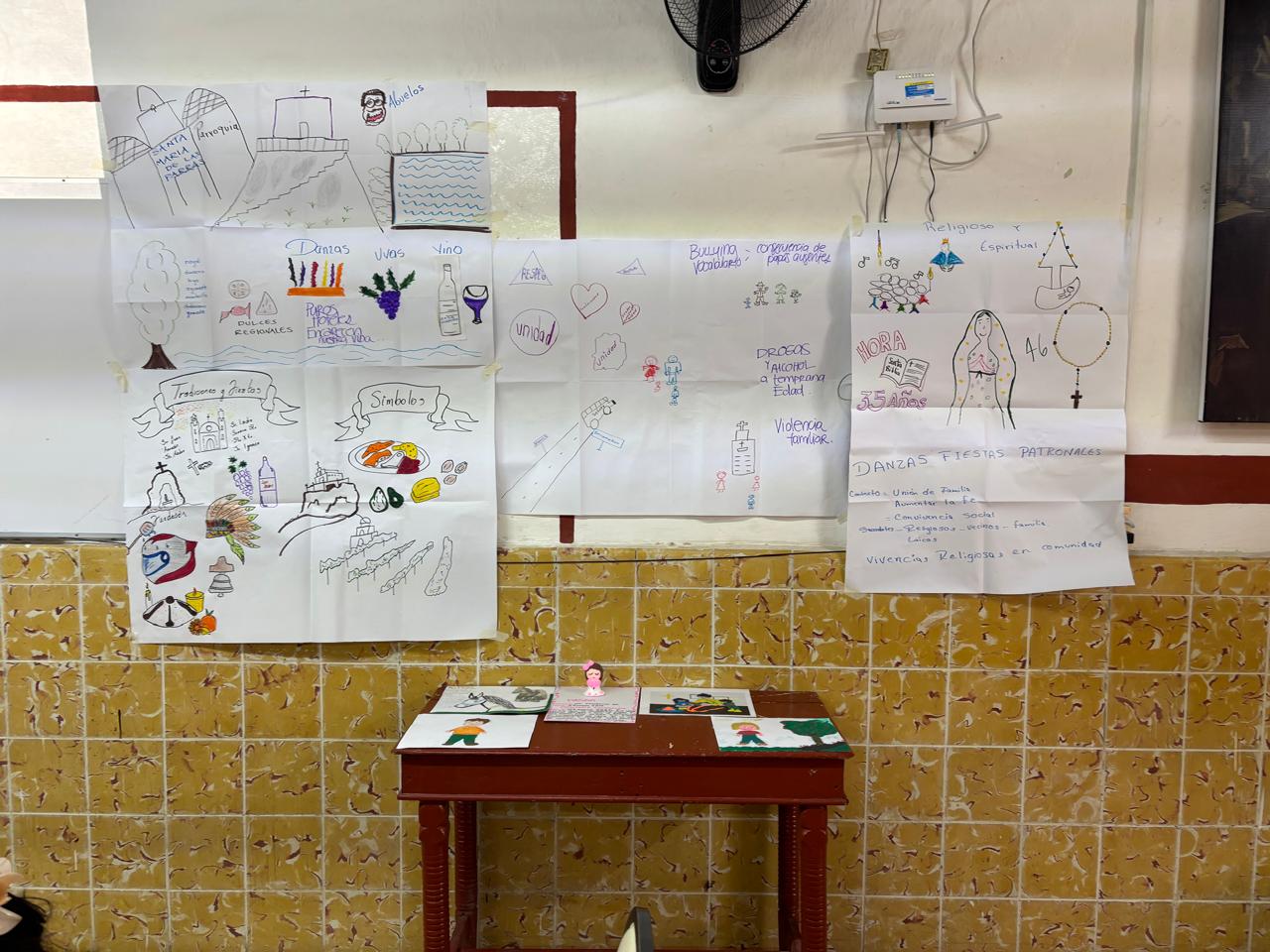
For the development of the Formation Plan for Catechists of the Parish of Santa María de las Parras, the objective was set to strengthen the pastoral work of catechists through a lived, practical understanding of the IPP. The aim was to promote knowledge of its origins, foundations, and five steps (context, experience, reflection, action, and evaluation), and to foster the development of a reflective, communal, and transformative spirituality that would enable participants to accompany faith processes from an Ignatian perspective.
One of the main intentions of the five-Friday process was to communicate the IPP using the IPP itself: the heart of the experience was living the elements of the paradigm in an intentional and conscious way, so that participants could try out each step,apply them within each session, and then create new proposals and projects for their own educational practice.
To use the IPP, we had to situate ourselves within the context: reflecting on the community in which the educators (and therefore their students) are embedded; getting to know each participant, because it is in that relationship that learning takes root. Intentional effort was made to nourish and celebrate community, inviting participants to meet new people within their own group.
One Friday was dedicated to introducing the group, both to each other and to the IPP. This included speaking about Saint Ignatius and the history of education in the Society, explaining the five steps of the paradigm, and addressing the notion of “paradigm” itself. In the second session,the idea of ‘context’ was examined in depth; catechists were encouraged to reflect on the socioeconomic, political, and cultural factors surrounding catechesis, the challenges they face, and the resources available to them. This was done in teams, through dialogue, and subsequently represented in images and words.
The third Friday was called “the heart of the experience” because it was devoted to the second and third steps: experience. The workshop focused on the sense of taste through an activity titled “What a Pleasure—the Sense of Taste” in which, with eyes closed, catechists were invited to sample different flavors and allow each one to bring forth memories, movements, feelings, and thoughts, before reflecting on what God wished to communicate to them through the experience of different flavors.
On the fourth Friday, we met with the children of the catechesis program and generated different stories that represented them and, in someway, led them to the notion that “love ought to show itself in deeds more than in words.” We also played with the cinematic notion of the word “Action!”—spoken after the clapperboard—as a symbol of the mobilization of the person, reclaiming action as an invitation to transform and act, moved by reflection and love.
Finally, on the closing day, a personal prayer rooted in the Spiritual Exercises was offered, inviting each participant to go beyond evaluating the workshop; it was an exercise of reflection, similar to the Contemplation to Attain Love from Saint Ignatius’s Spiritual Exercises, to recover their own experience as religious educators. As stated in the theoretical framework, it was an exercise of reflection leading to gratitude and the acknowledgment of experience,in order to “renew oneself” and return to the initial commitment of being a catechist. From that deep love and gratitude, the evaluation becomes closure, integration, and at the same time sending forth and restarting the continuous process of growth: seeking God in all things (experiences), knowing that part of finding him is seeking him (through reflection and discernment), and that this again moves us to be for and with others.
Within each session, the same structure given by the paradigm was maintained: context activities; a central experience to help us reflect on and know the theory or the depth of each step; cultivating the invitations received (action); and closing with an Ignatian pause as a representation of evaluation.
Results
The evaluation of the formative process revealed high appreciation on the part of participants, who recognized the workshop as a transformative experience that invited them to integrate the five steps of the IPP into their personal and ministerial lives.
Transformation of Catechetical PracticeOne of the main achievements was pedagogical innovation in the plans and methodologies used. Catechists indicated that they had incorporated new person-centered learning techniques, such as the creation of concrete learning situations, the use of sensory elements to generate meaningful experiences, and the inclusion of moments of reflection and discernment. They also emphasized the importance of contextualizing catechetical content to make it more meaningful, which involves knowing the reality of the students participating and adapting the evangelical message to their world.
These changes reflect the assimilation of Ignatian logic in the planning and depth of sessions, moving beyond practices centered solely on memorization.
Another axis of impact was the personal growth of catechists in adopting a more reflective, conscious, and committed attitude toward their service.
Application to Everyday LifeLearning was not limited to the parish sphere but extended into daily life. Participants reported greater self-knowledge, discernment, and authenticity; they recognized attitudes to transform and sought to live with mercy.
They also mentioned a strengthening of their relationship with God, a desire to serve, and the intention to bring love and empathy to all areas of their lives. Some noted that the daily evaluation of their actions has become a practice of prayer and spiritual growth.
Valued Aspects and Areas for ImprovementAmong the most valued aspects of the workshop were the participatory activities, teamwork, and the balanced combination of theory and practice, which fostered an environment of community and trust. The clarity in presenting the steps of the IPP and the general organization of the process were also recognized.
Participants mainly mentioned the lack of time both in the total duration of the workshop and in the development of some activities as areas for improvement. They suggested having supplementary written materials (readings, slides, planning guides) and extending the offering to other parish groups or ministries.
Taken together, the responses reveal that the learnings of the workshop are not perceived as external knowledge but as an integral method that transforms the way of teaching, relating, and living faith. The IPP was understood not only as a pedagogical tool but as a path of embodied Ignatian spirituality, capable of strengthening the Jesuit mission and communal commitment of those who accompany faith processes.
Conclusion
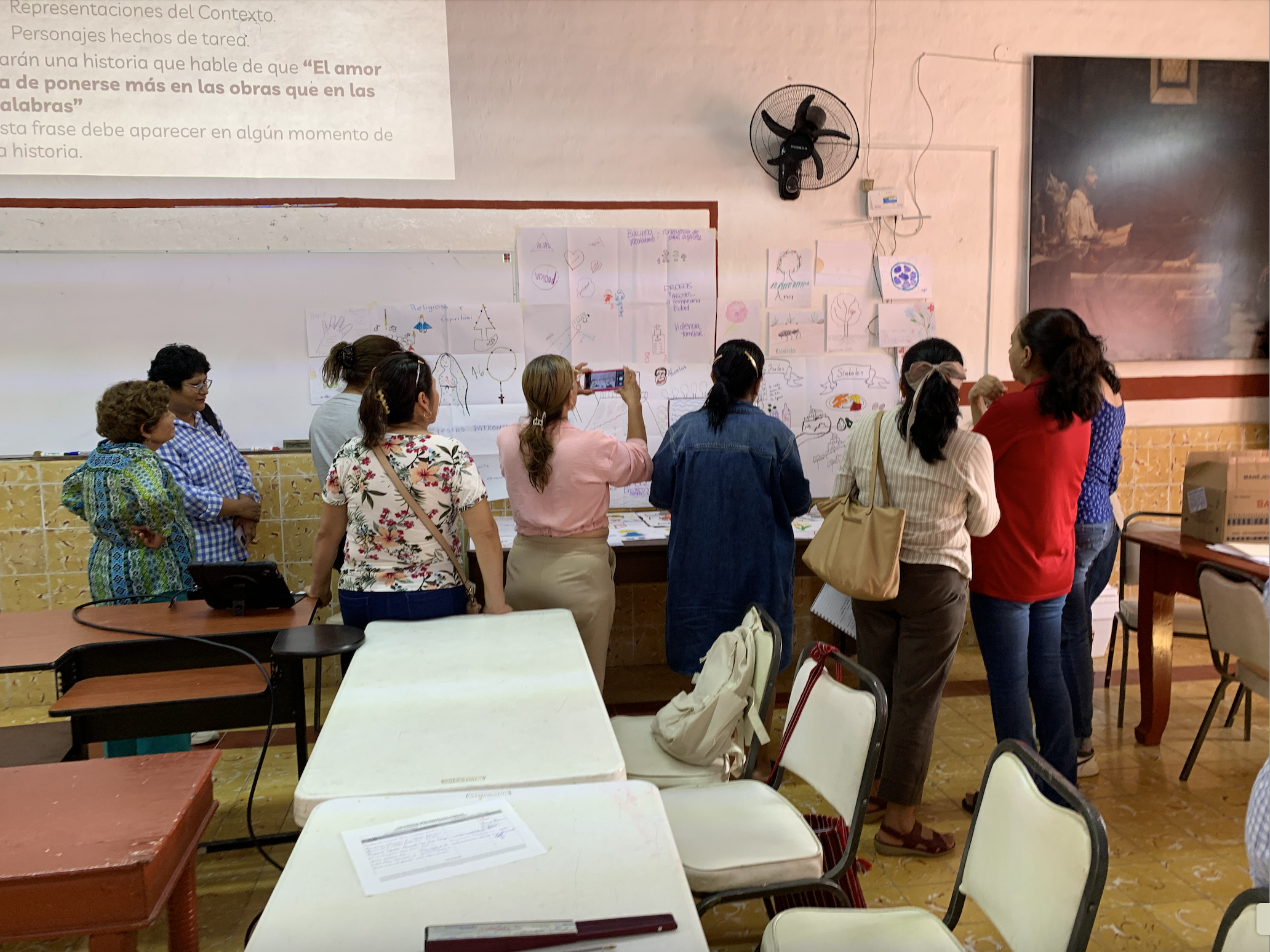
The Formation Plan in the Ignatian Pedagogical Paradigm constituted a starting point toward living the paradigm as a communal and institutional process. Experiences like this demonstrate that the IPP is not taught but rather experienced in daily practice: in fraternal relationship, shared reflection, and committed action, in fidelity to the First Universal Apostolic Preference (UAP): showing the way to God through the Spiritual Exercises and spiritual discernment (Society of Jesus, 2019).
The IPP as a Path of Learning and Discernment.
Being formed in the IPP means learning to see with discernment. Every formative space—course, workshop, or accompaniment—opens the possibility of embodying the Ignatian way of proceeding in teaching, administration, research, and service. From that experience arises the conviction that living the Ignatian way is a shared search, sustained by hope and the desire to transform reality, in harmony with the Third UAP: accompanying young people in creating a future full of hope.
Toward an Institutional Living of the Paradigm.
The IPP must become visible and measurable in all university spheres. Living it means that its dimensions (context, experience, reflection, action, and evaluation) are translated into institutional criteria and practices that guide planning, administration, and leadership. When the paradigm permeates organizational culture, it becomes a transformative axis that unites identity, mission, and service, in coherence with the Second UAP: walking with the poor and the excluded of the world in a mission of justice and reconciliation.
Learnings from a Transformative Experience.
The experience with the catechists of Santa María de las Parras demonstrated that the IPP can only be understood by living it. In dialogue, listening, and joint action, the spiritual dimension of learning and the communal meaning of service were revealed.
From this process we recognize that there is still a path to travelin order to be an active witness of the paradigm we proclaim. This demands permanent institutional conversion: reviewing practices, structures, and relationships in the light of Ignatian discernment and the pursuit of justice.
Extrapolating the IPP to the Whole of University Life.
The challenge lies in transposing the paradigm from the classroom to the totality of relationships, decisions, and structures that sustain the university. Some concrete actions to achieve this include:
Discerning Governance: integrating spiritual discernment into planning and decision-making processes.
Humanized Administrative Management: promoting cura personalis in services and labor relations as an expression of mutual care.
Integral Accompaniment: strengthening spaces for interiority and communal reflection, especially with young people.
Research and Social Engagement: orienting projects toward social transformation and the faith–justice dialogue.
Ignatian Leadership: forming directors and educators capable of discerning,accompanying, and serving.
Sustainability and Environmental Commitment: implementing ecological management policies and environmental responsibility.
Formative Institutional Communication: disseminating messages that educate and strengthen Ignatian identity.
Celebratory Culture and Living Memory: consolidating traditions that express communal meaning and institutional gratitude.
These actions allow the IPP to become the articulating principle of all university dimensions—academic, administrative, social, and spiritual—consolidating an authentic Ignatian educational culture.
An Invitation to Ignatian Coherence.
In this horizon, formative processes are not the end but the beginning of continuous transformation. The IPP invites us to live coherently what we teach, manage, and proclaim, integrating discernment, justice, hope, and sustainability.
From our position as a Jesuit university, this is an invitation to coherence: to let the paradigm be the common language that guides every decision and every relationship.
When the Ignatian spirit permeates the entire university structure, the IPP ceases to be a theory and becomes a form of institutional life and a visible witness of commitment to faith, justice, young people, and the care of our Common Home.
The experience of the Formation Plan in the Ignatian Pedagogical Paradigm at the Parish of Santa María de las Parras left a deep mark on all who participated. It made manifest that the paradigm is not a theory to bememorized but a way of seeing life and acting within it with meaning. Every encounter, every dialogue, and every shared silence revealed that Ignatian pedagogy only makes sense when it is lived. In doing so, it becomes an experience that transforms not only the way we teach, but also the way we are and the way we relate to one another.
This experience confirmed that educating from the IPP is an act of faith and hope: faith in the possibility that every person can be renewed from within, and hope that this interior transformation can also change the structures and communities we inhabit.
In that coherence between what one believes, feels, and does, Ignatian education reveals its most genuine strength: forming human beings capable of reconciling, serving, and transforming the world from the depth of their own experience.
Returning to the simple yet powerful image with which we began this text—that of the “IPPLenses”: putting on theIPPLenses means learning to view reality through the Ignatian Pedagogical Paradigm; looking attentively at context, allowing oneself to be touched by experience, reflecting deeply, acting moved by love, and evaluating with gratitude.
From that vantage point, everything we do—teaching, management, pastoral work, daily life—is reordered and takes on meaning. Because, ultimately, the IPP is the paradigm that orders everything: it orders the mind through discernment, the heart through gratitude, and the hands through service.
By looking at reality through the "IPPLenses", you discover that Ignatian pedagogy not only teaches us to think, but also to feel and to love more deeply. It is in that integral vision that Ignatian education finds its fullness: a pedagogy that forms competent, conscious, compassionate, and committed persons dedicated to the transformation of the world through the love that orders everything.
References
Institute of Ignatian Educational Studies. (1986).The Characteristics of Jesuit Education (Appendix B).
Kuhn, T. S. (2013).The Structure of Scientific Revolutions (2nd ed.). FCE – Fondo de CulturaEconómica.
Society of Jesus. (1993).Ignatian Pedagogy: A Practical Approach. Rome: General Curia of the Society of Jesus. Available at: https://www.sjweb.info/education/doclist.cfm
Society of Jesus. (2019).Universal Apostolic Preferences 2019–2029. Jesuits Global. Available at: https://www.jesuits.global/uap/
Freire, P. (2021).Pedagogy of the Oppressed (commemorative ed.). Siglo XXIEditores. (Original workpublished 1970). Available at: https://www.sigloxxieditores.com/libro/pedagogia-del-oprimido_14007
Granados, Luis Fernando S.J. (2015).Educational and Pedagogical Reflections with Ignatian Inspiration. Ignatian Pedagogical Paradigm.
Jarzamendi, A. (Ed.). (n.d.).Pedagogy as a Science of Education [Alirio Liscano]. Universidad Iberoamericana. Available at: https://repositorio.ibero.mx/handle/ibero/18577
Morin, E. (1999).Seven Complex Lessons in Education for the Future. UNESCO. Available at: https://unesdoc.unesco.org/ark:/48223/pf0000117740
Pérez Esclarín, A. (2024).Ignatian Pedagogy and Popular Education. Virtual Center for Ignatian Pedagogy. Available at: https://cvpi.uca.edu.sv/2024/01/21/pedagogia-ignaciana-y-educacion-popular/
Versión en Español
183.53 KB
Related Posts:
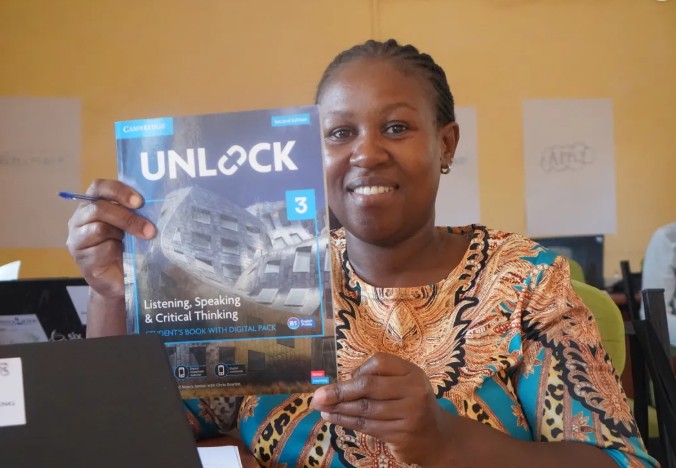
Since its launch in 2017, the GEL programme has reached 32,000 learners across 100 centers in more than 30 countries. Cambridge University has supported the program through teacher training initiatives and the creation of learning materials and exams, with over 30,000 Cambridge English tests taken to date.
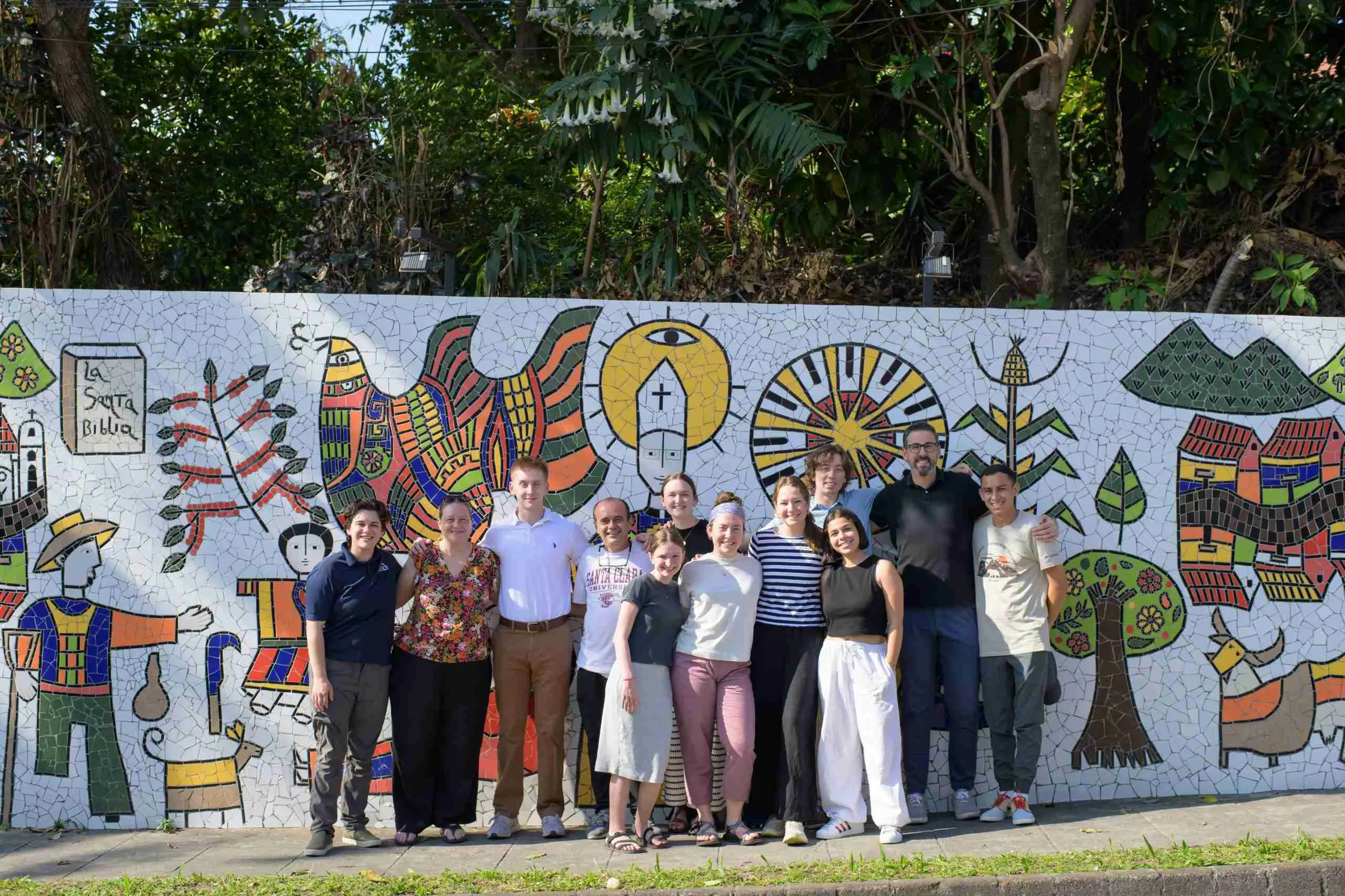
In the past eight years, the MAGIS Exchange program has impacted the lives of people all around the globe. They have operated in six regions worldwide, with a total global network of 42 Jesuit universities. Through this collaboration, the program has trained 207 students on important topics such as the Replicable Global Environmental Citizenship Course (GECC).
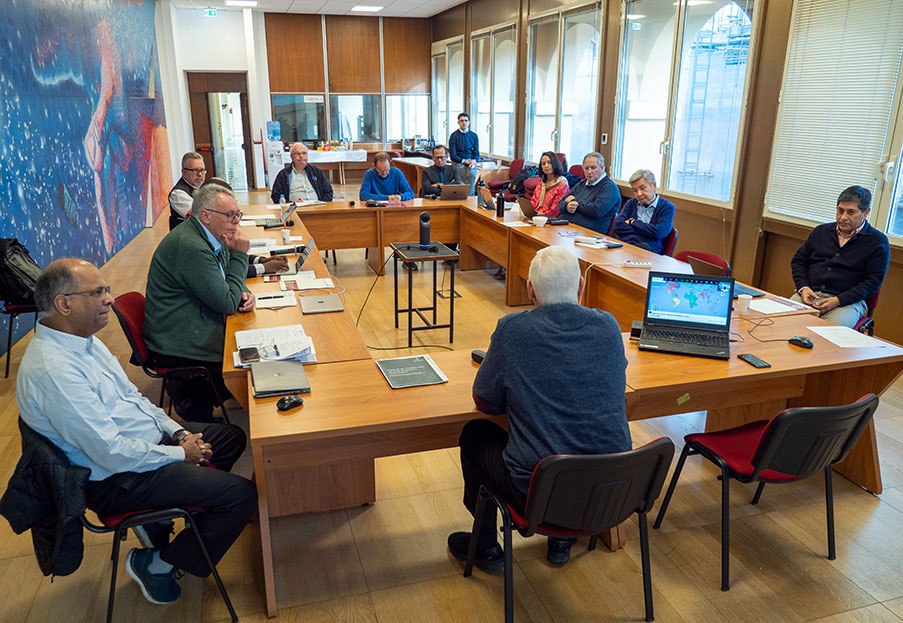
On 30-31 March 2026, the Board of the International Association of Jesuit Universities (IAJU) met at the General Curia in Rome to review the ongoing implementation of the Strategic Agenda (2024-2028) and the priorities defined at the Assembly in Bogotá in July 2025. At that Assembly, leaders from around the world identified six major challenges at the global level: democracy and global citizenship, student mental and spiritual health, secularization, Artificial Intelligence, migration and refugees, and environmental justice, along with a call to concretely increase collaboration among institutions.
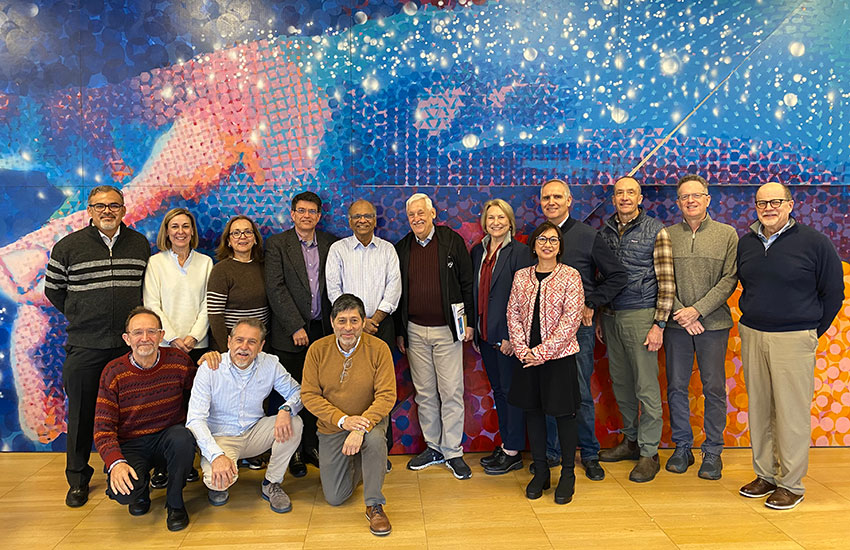
The conveners of ten working groups of the International Association of Jesuit Universities (IAJU) met for the first time in Rome from December 15 to 16 with the aim of fostering collaboration and aligning efforts towards a common vision: Jesuit universities as agents of social transformation in a world that desperately needs it.

This past August, the Jesuit commitment to the Universal Apostolic Preferences came to life through an inspiring global initiative connecting two continents. The Xavier Institute of Engineering (XIE) in Mumbai, India, and the Xavier Jesuit Institute (XJI) in Ijebu-Ode, Nigeria, joined forces once again to deliver Joy of Python—a program designed to expand educational opportunity and help close the digital divide in the Nigerian cities of Benin City and Lagos.
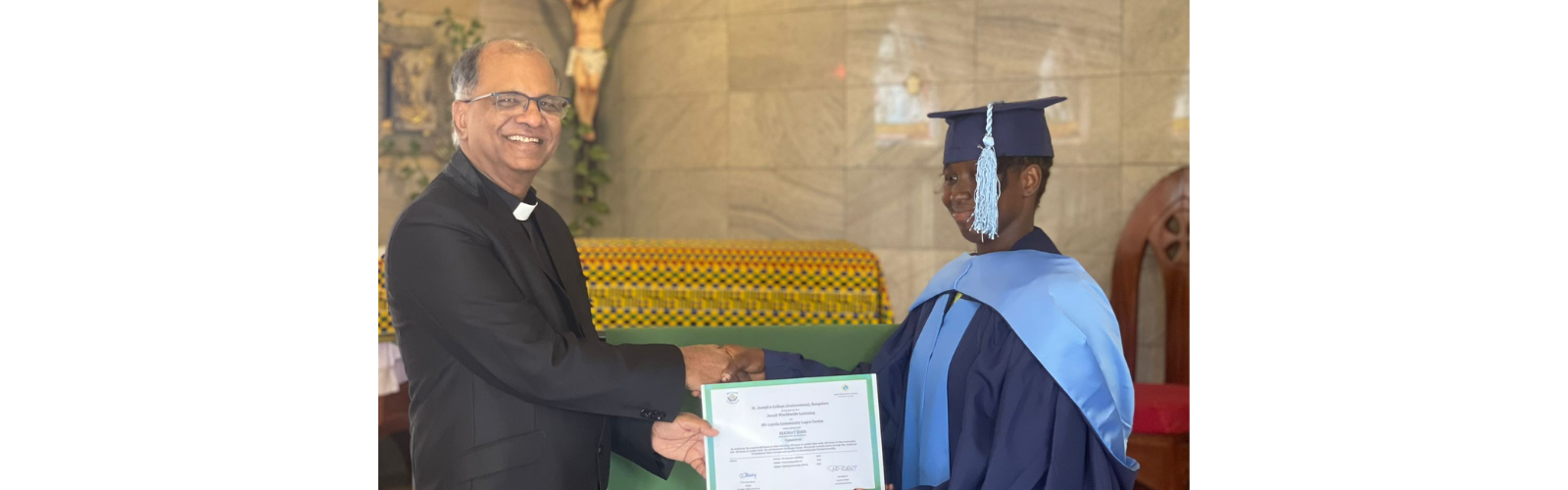
On the 31st of July 2023, the North-West Africa Province (ANW) of the Society of Jesus signed an MoU with the Jesuit Worldwide Learning (JWL) for higher education at the margins.