
IAJU Board meets in Rome to advance the Bogotá agenda
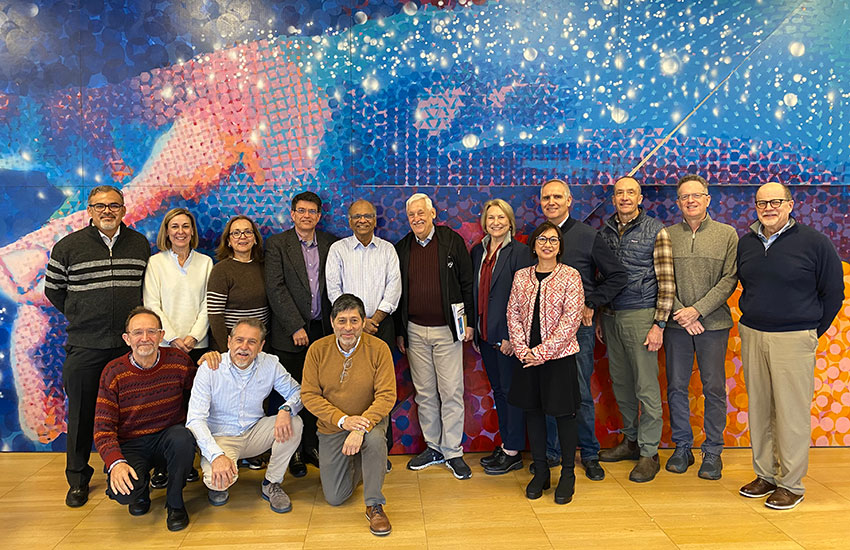
On 30-31 March 2026, the Board of the International Association of Jesuit Universities (IAJU) met at the General Curia in Rome to review the ongoing implementation of the Strategic Agenda (2024-2028) and the priorities defined at the Assembly in Bogotá in July 2025. At that Assembly, leaders from around the world identified six major challenges at the global level: democracy and global citizenship, student mental and spiritual health, secularization, Artificial Intelligence, migration and refugees, and environmental justice, along with a call to concretely increase collaboration among institutions.
The meeting welcomed five new Board members: Dr Julie Sullivan, President of Santa Clara University, and Dr Michele Murray, Senior Vice President at Holy Cross and President-designate of AJCU, representing North America; Fr Andrés Aguerre, SJ, Rector of the Universidad Católica de Córdoba, and Fr Carlos Fritzen, SJ, of the Universidade Católica de Pernambuco, representing AUSJAL; and Fr Albertus Bagus Laksana, SJ, of Sanata Dharma University (Indonesia), representing Asia Pacific.
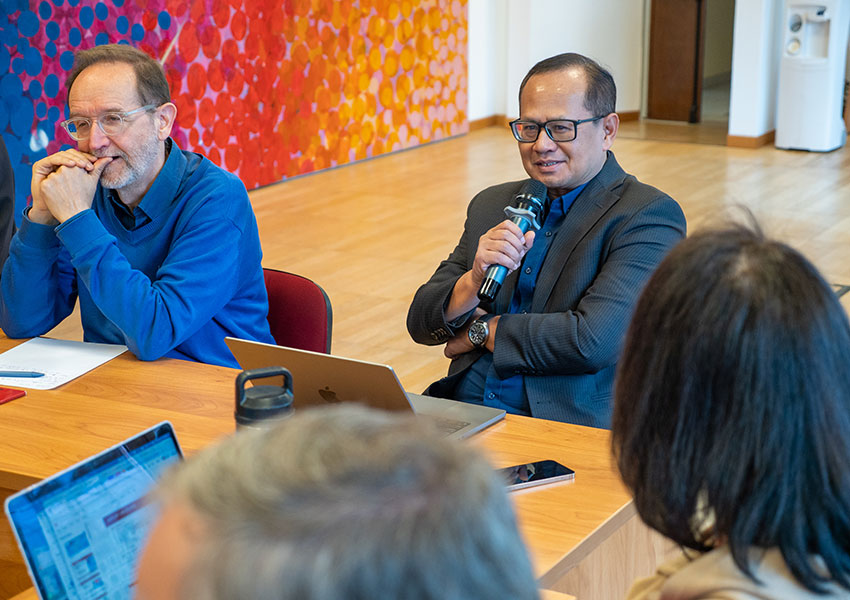
During the first day, representatives from the six regional associations shared their projects to implement the Strategic Agenda and the decisions made at the end of the Assembly over the next three years. Key topics included the need to strengthen Jesuit identity and mission in increasingly secular contexts and collaboration opportunities within and among regions. The conveners of the eight task forces also joined via Zoom to share their objectives and action plans in areas such as the well-being of the entire university community, artificial intelligence, environmental justice, democracy and global citizenship, peace and reconciliation, migration, education for the excluded, and formation and mission integration.
One of the central moments of the meeting was the interaction with Fr Arturo Sosa, SJ, Superior General of the Society of Jesus. In his remarks, Fr General raised fundamental questions for the future of the network: the need to research global trends in a fast-moving world; secularization understood not as a problem but as an opportunity and a space of freedom from which to develop Jesuit identity; and democracy understood within the framework of a secular society, oriented toward the common good, participation, and freedom. He also underscored the great challenge of collaboration, both among and within institutions, and invited reflection on how Jesuit universities can serve the poor through scholarships, pedagogy, and a clear definition of their social mission. On Africa, he encouraged institutions to grow well and take the necessary time, identifying people and areas for formation in both administration and teaching. He also noted that the Bogotá Assembly represented a significant step forward in defining the distinctive characteristics of Jesuit higher education, and pointed to the Mission Priority Examen, developed by AJCU in North America, as a tool that could be adopted by IAJU to build a common identity.
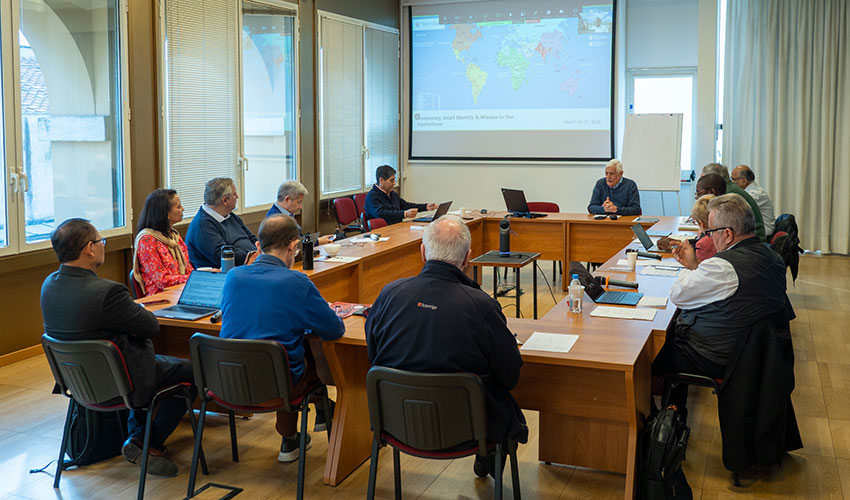
The Board also devoted time to discussing several collaborative projects of global scope, including the Jesuit Global Academy, a virtual educational platform to offer formation programs for faculty and staff at Jesuit universities worldwide; and the Arrupe Center for Peace and Democracy, a center to be established in Hiroshima dedicated to the study of peace, reconciliation, and disarmament. The Board also reaffirmed IAJU’s commitment to accompanying Jesuit universities in Africa and Madagascar, exploring concrete ways to strengthen interregional collaboration.
The meeting concluded with the planning of the next steps, including the preparation of the next General Assembly.
Related Posts:

The conveners of ten working groups of the International Association of Jesuit Universities (IAJU) met for the first time in Rome from December 15 to 16 with the aim of fostering collaboration and aligning efforts towards a common vision: Jesuit universities as agents of social transformation in a world that desperately needs it.

This past August, the Jesuit commitment to the Universal Apostolic Preferences came to life through an inspiring global initiative connecting two continents. The Xavier Institute of Engineering (XIE) in Mumbai, India, and the Xavier Jesuit Institute (XJI) in Ijebu-Ode, Nigeria, joined forces once again to deliver Joy of Python—a program designed to expand educational opportunity and help close the digital divide in the Nigerian cities of Benin City and Lagos.
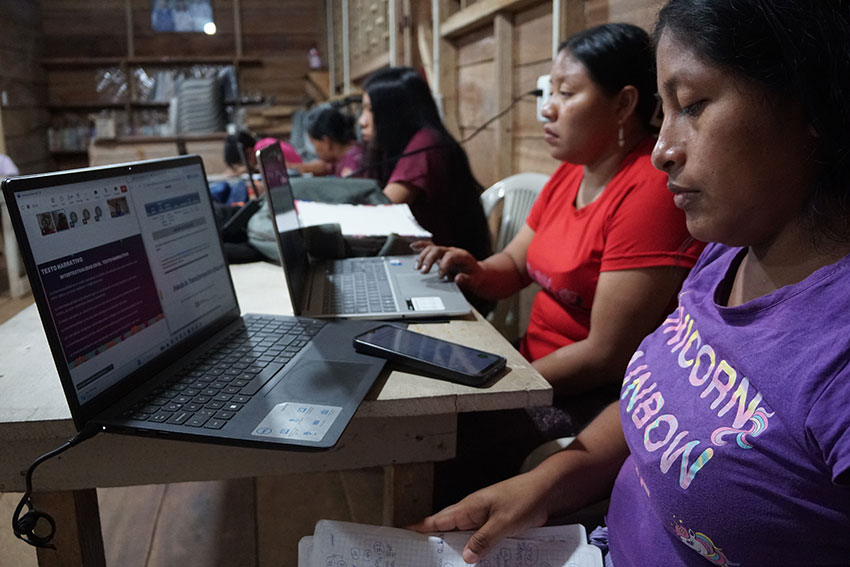
This six-month short-cycle tertiary programme, accredited (in Spanish) by the Pontificia Universidad Javeriana Cali, is designed to address the needs of communities all over the world to promote responsible tourism that allows the generation of income, while preserving the community’s fragile resources.

A New Research Chapter Begins: Launch of the Global Research Alliance of Jesuit Universities (GRAJU)
In August 2025, seven Jesuit universities came together to launch a landmark initiative: the Global Research Alliance of Jesuit Universities (GRAJU). Founded by Ateneo de Manila University (Philippines), Fordham University (USA), Georgetown University (USA), ITESO (Mexico), Sogang University (South Korea), the University of Deusto (Spain), and Namur University (Belgium), GRAJU marks a bold step toward deepening global research collaboration within the Jesuit higher education network.

Jesuit university leaders from across the globe to gather in Bogotá to discern the future of Jesuit higher education in response to the world’s greatest challenges